The Evolution of Rapid Removal
The need for junk pick up has evolved from a luxury to a practical necessity in Singapore’s compressed urban landscape, reflecting broader changes in how societies manage the consequences of consumption. In earlier decades, households disposed of unwanted items through informal networks of collectors and scrap dealers who traversed neighbourhoods with carts, calling out their services. That system, whilst picturesque in memory, proved inadequate for the scale and complexity of waste generated by modern prosperity. Today’s junk pick up services represent a professionalised response to an old problem made urgent by demographic density and environmental constraints. The National Environment Agency’s statistics reveal that Singapore’s households and businesses generate waste at rates that would have seemed inconceivable a generation ago, necessitating rapid, efficient collection systems capable of responding within hours rather than days.
The Same-Day Promise
The emergence of same-day junk pick up services marks a significant development in waste management convenience. This expedited service answers a genuine need. Life events often create urgent disposal requirements that cannot wait for scheduled collection dates. A tenant vacating a rental property faces contractual deadlines. A business closing its doors must clear premises quickly. A family dealing with sudden bereavement cannot postpone estate clearance indefinitely. An urgent renovation timeline leaves no room for delayed junk removal.
These situations share a common thread: time pressure that makes rapid junk pick up not merely convenient but essential. The services that emerged to meet this demand understood something fundamental about modern life. Flexibility commands premium value when circumstances leave no alternative.
What Same-Day Services Collect
The scope of items handled through junk pick up services spans virtually everything households and businesses need removed on short notice.
Typical collections include:
- Furniture of all types including beds, sofas, tables, chairs, and storage units
- Household appliances such as refrigerators, washing machines, and air conditioners
- Electronic waste including computers, televisions, and audio equipment
- Office furniture and equipment from commercial premises
- Renovation debris including fixtures, fittings, and construction materials
- Garden furniture and outdoor equipment
- Mattresses and carpets
- Miscellaneous household items accumulated over years
The comprehensive nature of these services reflects market demands rather than operational preference. Customers requiring urgent junk pick up typically need multiple item types removed simultaneously, making selective service offerings impractical.
The Operational Challenge
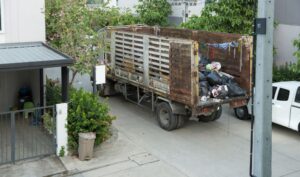
Providing same-day junk pick up presents logistical complexities that scheduled services avoid. The provider must maintain spare capacity to accommodate unpredictable demand. Vehicles and crews cannot be fully committed to scheduled routes if same-day requests are to be honoured. This excess capacity carries costs that manifest in premium pricing.
Consider the coordination required. A morning call for junk pick up must trigger route planning, crew assignment, vehicle allocation, and scheduling that accommodates both the new request and existing commitments. The operation resembles emergency services more than routine collection, requiring dispatching capabilities and communication systems beyond what scheduled services need.
Weather compounds these challenges. Tropical downpours can delay collections, yet commitments for same-day junk pick up cannot simply be postponed. The service promise itself creates operational pressures that scheduled collection avoids entirely.
Regulatory Compliance Under Time Pressure
Singapore’s National Environment Agency maintains strict licensing requirements for waste collectors, and these standards do not relax for urgent situations. Licensed operators providing junk pick up must still sort items appropriately, direct waste to approved facilities, maintain required documentation, and handle hazardous materials according to regulation.
The time pressure of same-day service makes compliance more challenging rather than less important. Electronic waste cannot go to general disposal facilities regardless of urgency. Appliances containing refrigerants require proper handling whether collected today or next week. The regulations exist to protect environmental and public health, considerations that override customer convenience.
Reputable junk pick up services build compliance into their operations regardless of collection speed. Unlicensed operators who skip these steps may offer quicker or cheaper service, but they shift environmental and legal risks onto customers and society.
The Premium for Speed
Same-day junk pick up commands higher prices than scheduled collection for defensible reasons. The operational costs of maintaining flexible capacity, the logistical complexity of accommodating urgent requests, and the premium paid to workers willing to respond on short notice all factor into pricing.
Customers paying these premiums are essentially purchasing flexibility and immediacy. The value proposition is straightforward: urgent situations justify premium costs when delay carries its own expenses. A property owner facing daily rental costs during vacancy clearance may find same-day junk pick up economically rational despite higher fees. A business minimising closure duration calculates rapid clearance as cost-effective.
The pricing reflects genuine economic realities rather than arbitrary markup. Services operating at the speed customers demand incur costs that scheduled operations avoid.
Making the Arrangement
Securing same-day junk pick up typically requires morning contact. Services operate within practical constraints. A call at 4pm requesting same-day collection may prove impossible if crews are fully committed. Morning requests allow time for route planning and execution within business hours.
Clear communication accelerates the process:
- Specify items requiring removal with reasonable accuracy
- Describe access considerations including stairs, lifts, and parking
- Indicate any time constraints on collection window
- Confirm your location and contact details
- Ask about licensing and disposal practices
This information allows providers to assess feasibility, allocate appropriate resources, and provide realistic pricing.
The Historical Perspective
The development of rapid junk pick up services illustrates how commerce responds to genuine needs created by changing social conditions. Singapore’s transformation from developing nation to prosperous city-state compressed into decades what other countries experienced over centuries. This rapid development created waste management challenges requiring innovative solutions. Same-day collection services represent one such innovation, born from the collision of prosperity, density, and the universal human tendency to accumulate possessions. The industry will continue evolving as demographics shift, consumption patterns change, and environmental pressures intensify. What remains constant is the need for efficient, reliable junk pick up.